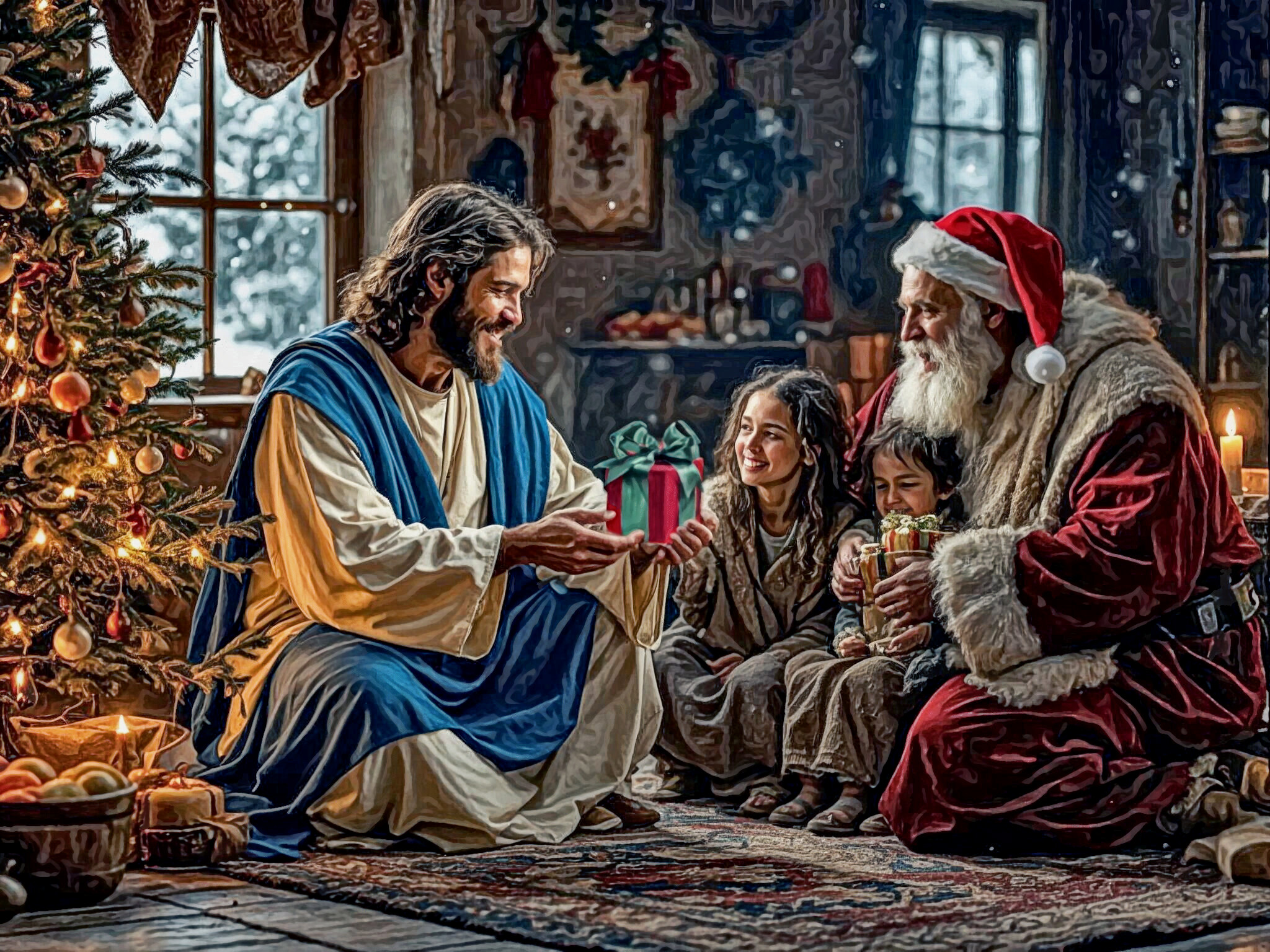
When we think about Christmas, we often picture two familiar figures: Jesus Christ and Santa Claus. At first, they might seem completely different. One belongs to the world of faith, and the other lives in stories and children’s imaginations. But together, they shape how we understand the meaning of the Christmas holiday. In fact, Christmas becomes stronger and more meaningful because these two traditions work side by side.
The Meaning Behind the Season
For Christians, Christmas begins with the story of Jesus Christ. His life teaches values such as loving your neighbor, forgiving others, and helping people in need. These ideas form the ethical heart of the season. They remind us to slow down, to think about kindness, and to focus on what truly matters—family, community, and compassion.
Santa Claus: A Story That Inspires Action
Santa Claus may seem like a playful character, but his roots point to a very real person: St. Nicholas, also known as St. Nick, was a bishop from the 4th century. St. Nick gave away his own wealth to help the poor, often in secret. Over many centuries, this story grew into the modern Santa Claus, who represents joyful generosity.
Because of Santa, the idea of giving is not only something we talk about, it becomes something we put into action. Santa brings the message of love to the world through the act of gift giving.
How These Two Traditions Work Together
Today, Christmas is a blend of these two influences. The tradition of exchanging gifts, which is one of the most visible parts of the holiday, comes from the example of St. Nick. Giving someone a present is a simple but powerful way to show love, care, and appreciation.
But the season goes beyond gift boxes and wrapping paper. The teachings of Christ encourage us to extend kindness to our whole community. That is why we see so many people volunteering, donating to charities, preparing meals for those who are alone, or reaching out to reconnect with friends and neighbors. Through these actions, the deeper message of Christmas becomes real and practical.
A Holiday of Reflection and Action
What makes Christmas unique is how well these two traditions fit together. Santa Claus invites people to participate through cheerful giving. Christ offers the deeper purpose behind that generosity. One speaks to the imagination; the other speaks to the heart.
The result is a holiday that encourages both reflection and action. It asks us not only to feel kindness but also to express it in the small, everyday moments that shape our relationships and our communities.
Christmas continues to endure because it blends these ideas seamlessly. It began with acts of real, personal generosity centuries ago, and today it continues through millions of people choosing to give, to care, and to share.