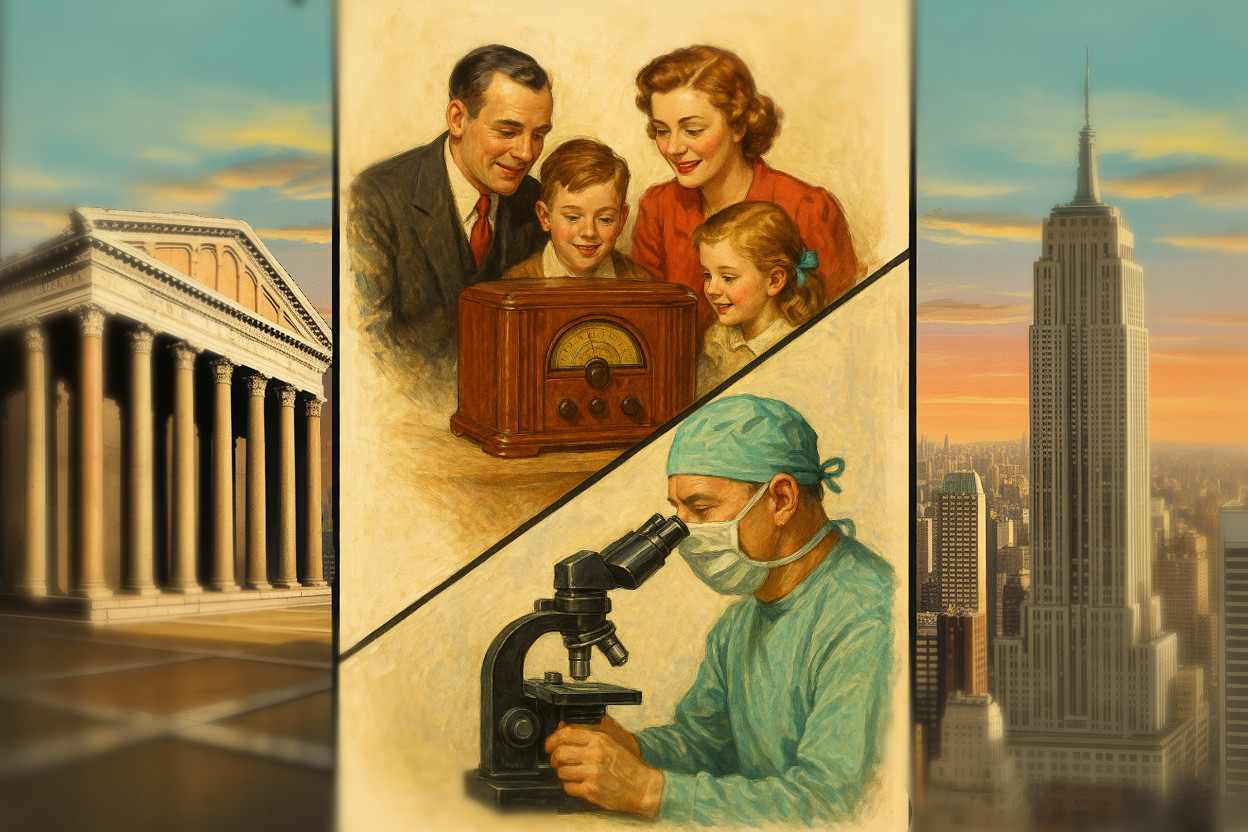
A paradigm is a shared perspective about how and why things work the way they do; specifically, how a set of factors contributes to an expected outcome.
When a prevailing paradigm is abandoned because of new beliefs, experiences or evidence, we call this a "paradigm shift."
Throughout history, paradigm shifts have transformed how humanity understands and interacts with the world. Two powerful examples demonstrate how such shifts reshape society and science.
For centuries, people believed information and entertainment could only travel as fast as physical objects could move. Newspapers delivered yesterday's news—morning editions couldn't cover the previous evening's events. Entertainment required attending theaters or concert halls. Distance meant isolation, especially for rural communities with limited access to performances.
When commercial radio emerged in the 1920s, these assumptions shattered overnight. Voices and music suddenly traveled through the air instantaneously to millions. A farmer in Kansas could hear the same program as a banker in Chicago. News, live sports, music, comedy, and drama were available to all walks of life—and all for free! People enjoyed news and entertainment within the walls of their own home—no travel; no admission fees.
Radio fundamentally changed what people believed was possible. Immediacy became the new standard. Mass culture emerged as millions shared experiences in real time. The world felt smaller and more connected. This paradigm shift established expectations for instant information and accessible entertainment that now define modern life.
For decades, cancer was viewed as a single disease requiring aggressive treatment to destroy or remove cancer cells through surgery, chemotherapy, and radiation. The approach was universal: attack and eliminate the cancer using the same methods for all patients.
New evidence from genetic research revealed that cancers differ significantly at the molecular level. Scientists discovered how cancer cells evade the immune system, leading to breakthrough immunotherapy treatments that strengthen the body's own defenses. Experiences showed that patients with seemingly similar cancers responded very differently to identical treatments.
These discoveries forced the medical community to abandon the "one-size-fits-all" approach. Cancer is now understood as many different diseases, each requiring personalized treatment strategies tailored to the patient's specific genetic markers and individual factors.
Paradigm shifts occur when new evidence, experiences, and beliefs challenge existing assumptions until the old perspective is abandoned for a fundamentally different understanding. These shifts don't merely improve existing approaches—they transform how we understand reality itself.
A shared way of understanding how things work and why outcomes happen.
When people reject an old perspective because of new evidence or beliefs.
Radio.
Through physical objects like newspapers, which were always delayed.
Enjoy news, music, sports, and entertainment instantly and for free.
Using the same aggressive methods for all patients, such as surgery, chemotherapy, and radiation.
That cancer is many diseases, requiring personalized treatments based on genetics.