Halloween vs. Day of the Dead: Unique Traditions
Introduction
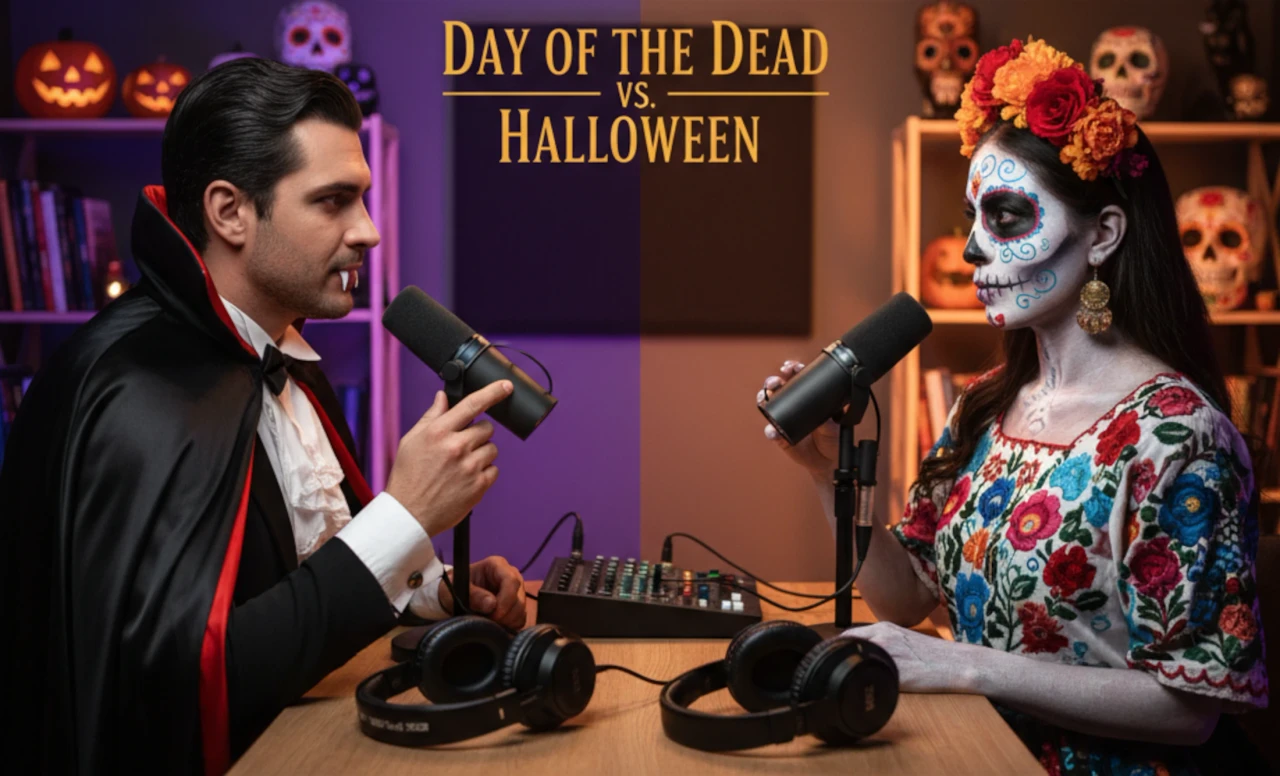
Halloween and Dia de Los Muertos are two fall holidays with distinct traditions. Halloween, rooted in Ireland, focuses on costumes, trick-or-treating, and spooky fun. In contrast, Dia de Los Muertos, celebrated in Mexico and parts of the US, honors deceased loved ones with altars, marigolds, and joyful family gatherings. While Halloween is eerie and playful, Day of the Dead is vibrant and celebratory, emphasizing remembrance and connection with the past.
Podcast Transcript
Host: It’s funny how October and November give us this back-to-back double feature: Halloween first, then Day of the Dead—both with their own flavors, even though they’re just days apart. Have you noticed how people sometimes mix them up just because of the timing?
Guest: You’re so right! The calendar overlap definitely causes confusion, even though the vibe of each holiday couldn’t be more different. Halloween’s all about costumes, haunted houses, and that sugar rush from trick-or-treating, but Day of the Dead feels so much more connected to family and memories.
Host: Exactly! Halloween has that whole thrill of being spooked, with ghost stories and skeletons everywhere—it’s fun, but not what I’d call spiritual. I love that Day of the Dead, or Dia de los Muertos, is really about honoring people who’ve passed away, not trying to scare anyone.
Guest: What stands out to me is the mood shift—Halloween leans into the eerie, while Day of the Dead is vibrant and almost celebratory. It’s like a reunion where the family gets together, including the ones who aren’t physically here anymore. There’s something beautiful about that.
Host: Speaking of that, I was totally fascinated learning about the ofrendas people build at home. There’s so much intention behind it—the photos, the foods, the marigolds. It’s a sensory way of inviting memories back for a visit.
Guest: Absolutely, and those marigolds are such a key detail—they aren’t just for decoration! Their bright orange color is supposed to guide spirits home, and the scent is almost like a calling card. Plus, papel picado and all the treats make the altar feel festive, not somber.
Host: The sugar skulls, too—I used to think they were creepy, but now I get that they’re part of the joyful side. It’s a way of saying, 'Hey, we remember you—and we’re glad you’re here.'
Guest: Exactly, it’s this gentle macabre, not meant to frighten at all. I even saw someone include photos of their pets on an ofrenda, which honestly made me tear up. It’s about celebrating every life that touched us, not just mourning the loss.
Host: That actually reminds me—events like the one at Pan Am Park really bring these traditions to life for everyone. Live music, art installations, food trucks, and those elaborate face paintings—it becomes this huge, colorful gathering.
Guest: What I love is how open those celebrations are. You see families, friends, kids with calavera face paint and even people who are just learning about the holiday for the first time. It’s welcoming—like, 'Come celebrate with us, no matter your background.'
Host: Totally. And I think even little touches—like putting together a small ofrenda at home, or adding your pet’s photo—can make the season feel more connected. It’s a reminder that joy and remembrance can go hand in hand.
Guest: Couldn’t agree more. Whether you’re carving pumpkins or sharing pan dulce, it’s a special time to honor our stories—both the spooky and the sweet. I think that’s what makes this season so unique.